SSOMA calls on UNSC to reject ‘status quo’ dialogue, urges comprehensive political process
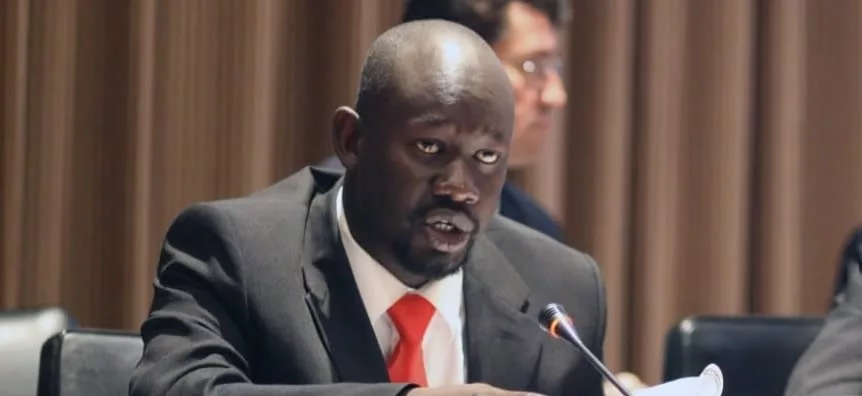
The South Sudan Opposition Movements Alliance (SSOMA) has welcomed the United Nations Security Council’s recent briefing on South Sudan while warning that the conditions necessary for credible elections do not currently exist in the country.
In a statement dated Aug. 10, SSOMA said the political, security, humanitarian and economic conditions facing South Sudan make it impossible to conduct free, fair, transparent and credible elections without first addressing the country’s unresolved political crisis.

The statement followed a Security Council briefing on South Sudan and the United Nations Mission in South Sudan (UNMISS) held on Aug. 6. During the meeting, UN officials warned the Council about continued violence, the deteriorating humanitarian situation and the lack of sufficient preparations for the elections planned for December 2026.
SSOMA said it appreciated the continued engagement of the United Nations, the African Union, regional organisations and international partners in seeking an end to South Sudan’s prolonged crisis. The alliance also commended the African Union High-Level Ad Hoc Committee for South Sudan, known as the C5, under the leadership of former Tanzanian President Jakaya Kikwete.
SSOMA questions conditions for elections
SSOMA said the country’s current political and security environment remains “unconducive” to credible elections.
The alliance pointed to the continuing political stalemate, military confrontations among the main signatories to the peace agreement, intercommunal violence, worsening humanitarian conditions and severe economic deterioration as obstacles to a credible electoral process.
The peace agreement referenced by SSOMA is the Revitalised Agreement on the Resolution of the Conflict in the Republic of South Sudan (R-ARCSS), signed in September 2018. It established the framework for the country’s transitional government and set out a series of political, security and institutional reforms intended to lead South Sudan towards permanent peace and democratic elections.
Implementation of the agreement has remained incomplete. The African Union’s Peace and Security Council has also expressed concern over the slow implementation of the R-ARCSS and the outstanding transitional tasks.
The Security Council has previously stressed that elections must be inclusive, transparent, peaceful and timely, while expressing concern over delays in implementing the peace agreement and the repeated postponement of elections.
SSOMA warned that holding elections without resolving the underlying political crisis could have the opposite effect of stabilising the country.
“Any elections conducted in the absence of a genuine political settlement, meaningful political participation, adequate security, legal framework and an inclusive civic environment risk legitimizing the status quo and exacerbating the conflict,” the alliance said.
Alliance rejects proposed interparty dialogue
SSOMA also called on the Security Council, the African Union and the international community not to recognise the planned interparty dialogue, arguing that it would serve to extend the existing political status quo.
Instead, the alliance urged international and regional actors to support what it described as a “new comprehensive political dialogue.”
The distinction is significant.
The interparty dialogue refers to a process involving political parties and actors within the existing political framework. SSOMA argues that such a process would not adequately address the wider conflict because important political and opposition actors remain outside the current transitional arrangements.
SSOMA instead called for a process that brings together political parties, opposition movements, civil society organisations, faith-based groups, women and youth.
The alliance said such a process should address the root causes of the conflict and produce a credible roadmap towards democratic transformation, national reconciliation and lasting stability.
AU C5 engagement
SSOMA’s reference to the AU C5 comes as regional efforts to address South Sudan’s political crisis have intensified.
The C5 is the African Union’s High-Level Ad Hoc Committee for South Sudan, established to help support the implementation of the peace process. The committee has continued to engage South Sudanese stakeholders, including through high-level visits and political consultations.
Former Tanzanian President Jakaya Kikwete was appointed by the AU in March 2026 as High Representative for the Horn of Africa and the Red Sea, with a special mandate on South Sudan. His subsequent consultations have focused on issues including implementation of the peace agreement, elections, inclusive dialogue, a ceasefire and the release of political detainees.
The AU has itself repeatedly stressed the importance of inclusive dialogue. At a C5 Plus Summit in February, African leaders expressed concern over South Sudan’s deteriorating political and security situation and called for dialogue and full implementation of the R-ARCSS.
SSOMA: Political solution remains the way forward
SSOMA said sustainable peace cannot be achieved through elections alone or through an extension of existing transitional arrangements.
Instead, the alliance called for a “genuine, inclusive, and comprehensive national dialogue” involving all relevant South Sudanese stakeholders.
The alliance reiterated that it remains committed to an inclusive peace process and dialogue aimed at achieving what it described as a “democratic, inclusive, stable and prosperous South Sudan.”
The statement was signed by Amb. Emmanuel Ajawin, Secretary General of SSOMA.
The SSOMA position comes as international pressure grows on South Sudan’s political leaders to halt renewed violence, complete the outstanding provisions of the peace agreement and establish conditions under which the country’s planned elections can be conducted credibly.
For SSOMA, however, the central issue is not simply whether elections are held, but whether the political conditions exist for those elections to contribute to a genuine democratic transition rather than reinforce the existing political order.
Related
Security Council, 10206th Meeting (AM) UNMISS | UN Meetings Coverage and Press Releases