NAS warns SPLM-IG power struggle could deepen South Sudan’s political instability
The National Salvation Front (NAS) has warned that internal power struggles within the Sudan People’s Liberation Movement-in-Government (SPLM-IG) could further destabilise South Sudan, arguing that the ruling party’s internal disputes are diverting attention from the country’s wider constitutional crisis.
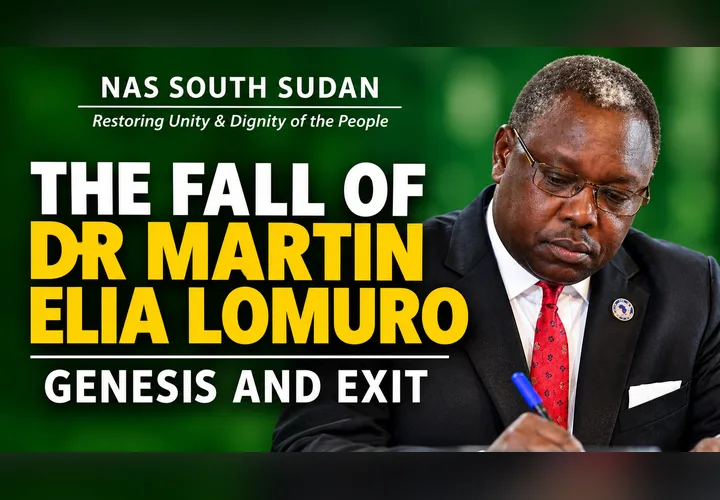
In a statement issued on Tuesday, 3 November, NAS linked the recent removal of long-serving Cabinet Minister Dr Martin Elia Lomurö to disagreements within Gen Salva Kiir’s inner circle over elections, the future of the legislature and the handling of the Inter-Party Dialogue.

The fall of Dr Martin Elia Lomurö
NAS described Dr Lomurö’s removal as a significant development in the internal power struggle within the ruling establishment. According to the movement, his departure followed disagreements over the political direction of the caretaker administration, particularly questions surrounding elections, legislative arrangements and the Inter-Party Dialogue.
The movement said the dispute exposed competing interests within Gen. Kiir’s inner circle, with different factions seeking to influence the country’s political direction and position themselves in the emerging succession struggle.
NAS argued that the confrontation was less about addressing South Sudan’s national challenges than about preserving political influence and securing positions within the ruling establishment.
Disagreements within the ruling party
According to NAS, the disagreements centred on whether to hold elections, whether to designate them as general elections or simply elections, the future composition of the legislature, and the management of the Inter-Party Dialogue.
The movement said the dispute involved two groups within the ruling establishment, which it characterised as SPLM-IG hawks and a faction associated with Lomurö.
NAS said the disagreement was fundamentally about influence and positioning in the succession struggle rather than a principled debate over South Sudan’s national interests.
It said the dispute failed to address the issues that matter most to citizens, including national sovereignty, their rights, and lasting peace.
Primaries expose further divisions
NAS also pointed to the recent SPLM-IG party primaries as evidence of growing internal competition and leadership divisions.
The movement said the results had exposed fractures within the ruling party, with the party’s established leadership facing challenges from a group it described as increasingly ambitious.
In Upper Nile State, NAS said the results represented a significant setback for the party’s historical leadership, citing the defeat of prominent members, including Rebecca Joshua Okwachi, and gains by the Agwelek group.
In Jonglei State, the movement said nearly all contested positions had been won by members who had recently returned from the SPLM-IO, with General James Hot Mai identified as a notable exception.
In Unity State, NAS said a directive reportedly issued by the caretaker governor for caretaker commissioners to contest the primaries had been interpreted within the party as an attempt to establish a separate political base, adding to existing tensions.
The movement warned that the outcomes had reportedly not been well received by some members of the party’s leadership.
Warning over wider instability
NAS cautioned that tensions arising from the internal political contests could spill over into wider instability, including possible fighting among communities that have already endured years of conflict.
It argued that competition for positions within the ruling party could not resolve the country’s constitutional impasse or provide the national mandate required to govern.
The movement said South Sudan needed a genuine, inclusive and comprehensive national dialogue to address the root causes of the conflict and establish a sustainable path to peace.
NAS maintained that the country’s political future should not be determined by succession battles within a narrow political circle, but through a transparent process that places the interests and welfare of the South Sudanese people first.
The statement was issued by the Office of the Spokesperson of the National Salvation Front on 3 November 2026.