
NAS warns of ‘dramatic events’ of great consequence in next few weeks
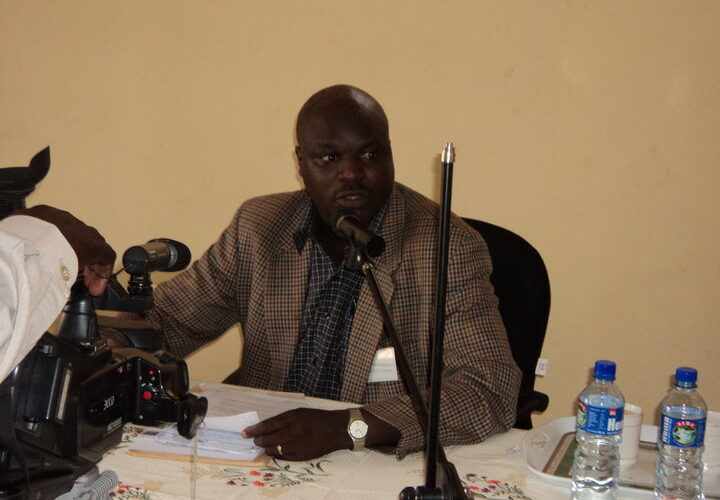
The National Salvation Front warns that South Sudan is heading towards a dangerous political crossroads, as failed dialogue, questionable election preparations, divisions within the ruling SPLM-IG and reported succession struggles within the Kiir family threaten the country’s constitutional order.
The National Salvation Front (NAS) has sounded an urgent warning over South Sudan’s political direction, cautioning that dramatic events in the coming days could have far-reaching consequences for the country’s stability, constitutional order and future.

In an urgent public message issued on 23 October 2026, NAS spokesperson Suba Samuel Manase outlined what the movement sees as mounting dangers arising from the collapse of political consensus, the proposed December elections, growing divisions within the ruling Sudan People’s Liberation Movement in Government (SPLM-IG) and reported struggles over succession within President Salva Kiir Mayardit’s immediate family.
NAS placed these developments in the context of what it described as a constitutional coup on 22 September, when President Kiir dissolved the Revitalised Transitional Government of National Unity (R-TGoNU) and established a caretaker government.
The movement warned that South Sudan cannot resolve its deep-rooted political crisis through unilateral decisions, manufactured consensus or arrangements designed to prolong the hold on power. The country requires a genuine political settlement grounded in the will of its people and a constitutional order that serves all South Sudanese.
Failed Dialogue Exposes the Absence of Political Consensus
The inter-party dialogue convened in Juba on 24 September was intended to build consensus on the proposed December elections. Instead, NAS said, the discussions ended without agreement or a communiqué, exposing the continuing divisions among the political parties.
According to the statement, the SPLM-IG sought to steer the process towards postponing elections and extending the transitional period. NAS also raised concerns over what it described as attempts to secure individual political support through inducements and intimidation rather than address the fundamental questions facing the country.
For NAS, a dialogue that produces neither consensus nor an agreed outcome cannot be presented as a credible solution to the national crisis. Nor can private arrangements with individual politicians substitute for a genuine national political settlement.
The movement called on political parties to stand firm against any proposal that would legitimise the President’s continued stay in power beyond his mandate. It urged them to put the interests of the people above political expediency and reject attempts to turn dialogue into an instrument for extending the status quo.
December Elections: A Process Under Serious Question
NAS warned that the proposed December 2026 elections face fundamental obstacles that cannot be resolved through political declarations alone.
The statement identified inadequate time for voter registration, civic education, candidate nominations, dispute resolution and logistical preparations. It also questioned the readiness of electoral institutions, citing the absence of established sub-electoral offices and structures and the lack of adequate recruitment and training of electoral personnel.
The security situation presents a further challenge. NAS said continuing insecurity across large parts of the country could prevent citizens from registering, campaigning and voting freely.
The movement also pointed to the absence of firm commitments from international partners expected to support and observe the elections, raising questions about the credibility of a process conducted without adequate preparation and safeguards.
NAS warned that proceeding under such conditions risks producing disputed results, deepening political divisions and opening another chapter of instability. Elections must offer citizens a meaningful opportunity to determine their leadership, not serve as a mechanism for legitimising a predetermined political outcome.
The movement also challenged the authorities to explain how they intend to secure public acceptance of a new transitional arrangement if the proposed elections are postponed.
SPLM-IG in Disarray as Election Plans Shift
NAS identified growing contradictions within the ruling SPLM-IG over the direction of the political transition.
The statement said the party had encouraged aspiring candidates to prepare for primaries, with substantial sums reportedly collected in application fees. Yet subsequent indications that the process could shift towards party congresses and a convention have raised questions about the fate of the candidates’ payments and the assurances previously given to them.
NAS argued that these developments have created uncertainty among candidates and exposed weaknesses in the ruling party’s management of the electoral question.
The movement also expressed concern that internal party processes could be used to sideline critical voices, particularly at state level, under the pretext of party discipline.
Unresolved grievances, financial disputes and uncertainty over the party’s direction could deepen existing divisions within the SPLM-IG. NAS warned that postponing elections without clear explanations and accountability would further undermine confidence in the ruling party’s political commitments.
The unfolding situation, in NAS’s assessment, raises fundamental questions about the authorities’ ability to deliver a credible transition while maintaining political cohesion within their own ranks.
NAS Rejects the Prospect of Dynastic Rule
Perhaps most consequentially, NAS raised the alarm over reported succession struggles within President Kiir’s immediate family.
The movement insisted that South Sudan is a republic, not a monarchy, and that the presidency is a public office governed by constitutional procedures rather than a family inheritance.
Any attempt to arrange the transfer of state power within one family outside the constitutional order and the will of the people would undermine the foundations of the republic. NAS warned that such a course would risk entrenching personal and family control over state institutions while denying citizens their sovereign right to determine the country’s leadership.
The movement cautioned that contested succession, political exclusion and the concentration of power could provoke resistance and renewed violence.
South Sudan’s future, NAS maintained, must be determined by its people through legitimate institutions and an inclusive political settlement, not by private succession arrangements.
Three Dangers Facing South Sudan
NAS identified three interconnected dangers confronting the country: renewed fighting arising from contested succession and political exclusion; an illegitimate extension of the transitional period without a mandate from the people; and an unconstitutional transfer of power to a member of the President’s immediate family.
The movement warned that these developments could reinforce one another, further weaken constitutional governance and deepen the crisis facing South Sudan.
NAS’s warning is that the country cannot afford to treat these developments as isolated political disputes. Together, they raise fundamental questions about who exercises state power, the basis of that authority and whether the people of South Sudan will be allowed to determine their own future.
NAS Calls for Principled International Action and Genuine National Dialogue
NAS called on the international community, the African Union, the Intergovernmental Authority on Development (IGAD) and the C5 countries to exert firm and principled pressure on the authorities in Juba to accept a genuine, inclusive and comprehensive national political dialogue.
The movement urged political parties to reject any proposal that would validate the President’s continued stay in power beyond his mandate, regardless of the political inducements or assurances accompanying it.
NAS also called on the people of South Sudan to reject what it described as sham elections, illegitimate extensions of the transitional period and any family-based transfer of power. It urged citizens to remain steadfast in demanding a national dialogue that addresses the root causes of the conflict and establishes a credible path towards sustainable peace.
For NAS, the way forward requires more than another political arrangement among the country’s leaders. It demands an inclusive settlement that restores constitutional order, respects the sovereignty of the people and lays the foundations for democratic federal governance.
The movement reaffirmed its commitment to peace, constitutional order and a democratic federal South Sudan that belongs to all its citizens.
As the country approaches a critical period, NAS has urged South Sudanese and international stakeholders to take the warning seriously. The choices made in the coming days, the movement cautioned, could have consequences extending far beyond the immediate political contest and shape the country’s future for years to come.


