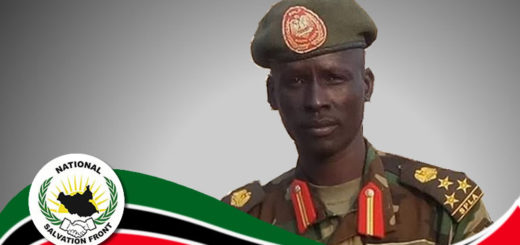
NAS rejects December Elections, warns South Sudan faces deeper crisis without inclusive peace process
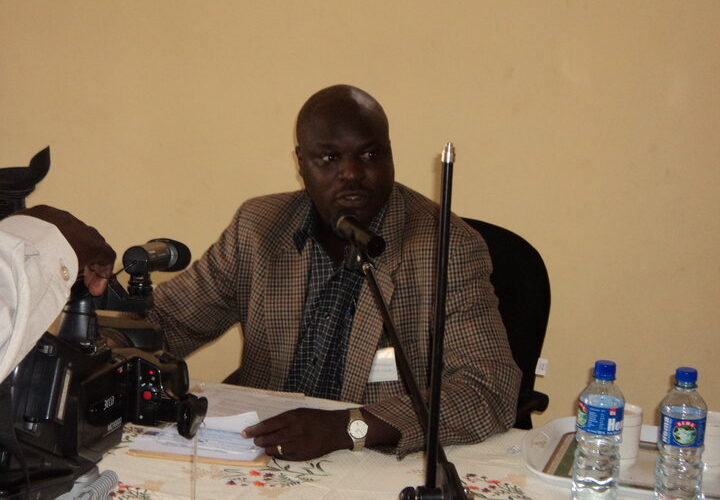
..the plan is dishonet, deceptive and effectively steals legitimacy for the purposes of continuing in power
The National Salvation Front (NAS) has rejected South Sudan’s planned December 2026 elections, arguing that the country remains too unstable to conduct credible polls and warning that proceeding with the vote without first resolving the underlying conflict will only deepen the nation’s political and security crisis.
In a statement issued on Friday, NAS described the planned elections as a political exercise designed to legitimise President Salva Kiir’s continued hold on power rather than provide South Sudanese citizens with a genuine democratic choice.

The movement also dismissed the government’s recently announced inter-party dialogue, arguing that consultations limited to registered political parties cannot replace an inclusive political process involving all parties to the conflict and broader South Sudanese society.
Elections without the foundations of democracy
The rejection comes as South Sudan prepares for elections scheduled for December 2026 following several extensions of the country’s transitional period since the signing of the 2018 Revitalised Peace Agreement.
While the government maintains that elections are necessary to complete the transition, opposition groups have repeatedly argued that the fundamental conditions required for free and credible elections have yet to be established.
According to NAS, South Sudan continues to experience armed conflict, widespread insecurity, economic collapse and political instability. The movement said fighting remains active in several parts of the country, while millions of South Sudanese remain displaced internally or as refugees in neighbouring countries.
NAS further argued that key democratic and institutional requirements necessary for credible elections are still absent. Among the deficiencies identified are the lack of a population census, unresolved constituency boundaries, the absence of an independent judiciary, restrictions on political freedoms, and the lack of neutral electoral institutions capable of administering an impartial vote.
The movement maintains that elections conducted under these conditions cannot meet international standards of transparency and credibility.
Warning against a renewed political crisis
NAS warned that holding elections in the current environment risks triggering further instability rather than resolving the country’s long-running political crisis.
According to the movement, elections conducted without political consensus and adequate safeguards would not unite the country but instead accelerate political fragmentation, insecurity and institutional collapse.
The statement argues that democratic elections must represent the freely expressed will of citizens rather than serve as a mechanism for extending the authority of an incumbent government without broad political legitimacy.
Inclusive dialogue remains the alternative
Instead of proceeding directly to elections, NAS renewed its call for comprehensive and inclusive political negotiations aimed at resolving what it describes as the root causes of South Sudan’s conflict.
…elections should follow, not precede, the establishment of the institutions
The movement said any meaningful dialogue should involve all stakeholders, including political parties, armed movements, civil society organisations, women, youth representatives and faith-based institutions.
According to NAS, only such an inclusive process can establish the political consensus and security environment necessary for democratic elections and a sustainable transition.
The movement reaffirmed that it does not oppose elections as a democratic principle. Rather, it argues that elections should follow, not precede, the establishment of the institutions required to guarantee their legitimacy.
Among the prerequisites identified by NAS are lasting peace and security, protection of civilians, adoption of a permanent constitution, an agreed legal and electoral framework, neutral electoral institutions, a credible population census and an environment that guarantees civic and political freedoms.
Inter-party dialogue dismissed
NAS also rejected the government’s proposed inter-party dialogue, describing it as an exercise that diverts attention from the country’s underlying political crisis.
The movement argues that discussions confined to government-recognised political parties cannot substitute for negotiations that include all parties to the conflict and address the causes of South Sudan’s prolonged instability.
For several years, opposition movements grouped under the South Sudan Opposition Movements Alliance (SSOMA) have consistently advocated an inclusive political settlement, maintaining that sustainable peace cannot be achieved through unilateral political processes or partial implementation of peace agreements.
…NAS remains committed to “a peaceful, inclusive, comprehensive, genuine and acceptable negotiated political process”
Appeal to regional and international partners
NAS concluded its statement by calling upon the African Union, IGAD, the Troika, the C5 grouping, the United Nations and the wider international community to prioritise an inclusive political process over what it described as premature elections.
The movement urged regional and international partners to support negotiations capable of producing lasting peace, democratic governance and constitutional order before South Sudan proceeds to national elections.
NAS spokesperson Suba Samuel Manase said the movement remains committed to “a peaceful, inclusive, comprehensive, genuine and acceptable negotiated political process” capable of delivering lasting peace, security and democratic governance for the people of South Sudan.