
SSOMA sets firm peace terms as AU leaders echo call for inclusive dialogue in South Sudan
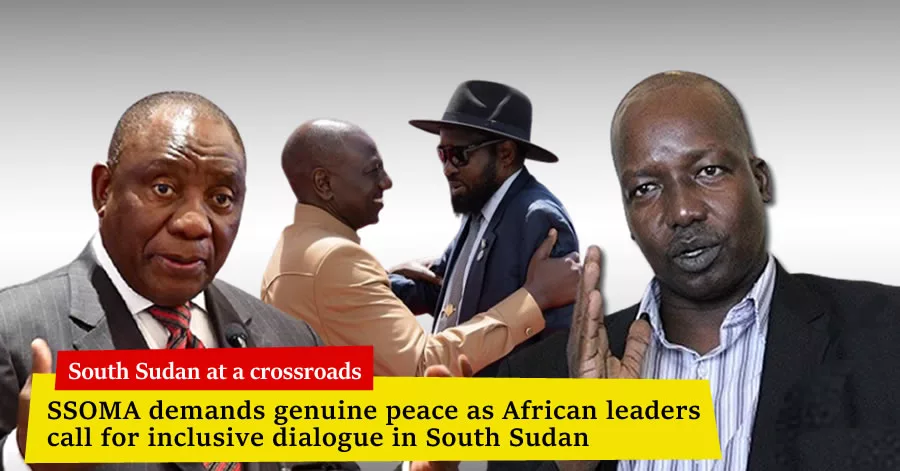
The South Sudan Opposition Movements Alliance (SSOMA) has set out clear conditions for any credible peace process in South Sudan, declaring that only a genuinely inclusive political settlement addressing the root causes of conflict can deliver lasting stability.
In its formal response to the Kenya-led Tumaini Initiative, SSOMA reaffirmed its commitment to a just and sustainable peace that guarantees justice, dignity, security and sovereignty for the South Sudanese people. The alliance warned that current proposals risk recycling failed political arrangements that have prolonged instability and entrenched the country’s crisis.
SSOMA rejected the Tumaini framework as a process developed without meaningful consultation with South Sudanese stakeholders, arguing that it undermines the fundamental principle that peace must be owned by the people. According to the alliance (see document above), the initiative predetermines outcomes, restricts genuine negotiations and prioritises elections while deliberately avoiding structural issues including governance failure, security reform and political exclusion.
The alliance maintains that elections conducted amid conflict, mass displacement and institutional collapse cannot produce legitimate leadership or sustainable peace. Instead, SSOMA is calling for broad national consultations followed by comprehensive negotiations that directly address the root causes of conflict and produce a credible agreement with enforceable guarantees and accountability mechanisms. It emphasised that elections must be the outcome of peace – not a substitute for it.
SSOMA’s position comes as regional leaders increasingly stress similar principles. At a recent summit of the AU Committee of Five, chaired by Cyril Ramaphosa, African heads of state called for inclusive dialogue and urged South Sudan’s leaders to listen to their people, warning that decisions taken in the coming months will determine whether the country moves toward durable peace or renewed instability.
The meeting reaffirmed the central role of African-led mediation through the African Union and the Intergovernmental Authority on Development, emphasising credible political processes and broad participation – principles that reinforce SSOMA’s demands for legitimacy and national ownership.
Despite mounting regional pressure, the government of Salva Kiir continues to prioritise elections and the implementation of the Revitalised Agreement on the Resolution of the Conflict in the Republic of South Sudan as the central framework for transition.
However, the agreement has demonstrably failed to deliver its core commitments. More than seven years after its signing, critical provisions including security arrangements, institutional reforms and accountability mechanisms – remain unimplemented. Opposition actors argue that continued reliance on the agreement reflects an effort to preserve political control rather than resolve the country’s underlying crisis.
The Tumaini process, spearheaded by William Ruto, has further exposed deep divisions over the direction of the peace process. While presented as a pathway toward dialogue, SSOMA maintains that the initiative seeks primarily to revive existing arrangements rather than confront the structural causes of conflict, warning that externally driven frameworks risk perpetuating cycles of instability.
The growing alignment between SSOMA’s position and regional calls for inclusive dialogue reflects increasing concern over the direction of South Sudan’s political transition and strengthens the case for a credible, comprehensive and people-driven peace process.
Related
South Sudan opposition group rejects Kenya-led peace framework – Radio Tamazuj
South Sudan Opposition Rejects Kenya-Led Peace Talks, Sets Pre-Conditions – Kenyans.co.ke


1 Response
[…] South Sudan Opposition Movements Alliance (SSOMA) has echoed these concerns, warning that Nairobi must provide credible security guarantees and demonstrate independence from […]