Opinion: Returning South Sudan to the Stone Age!!
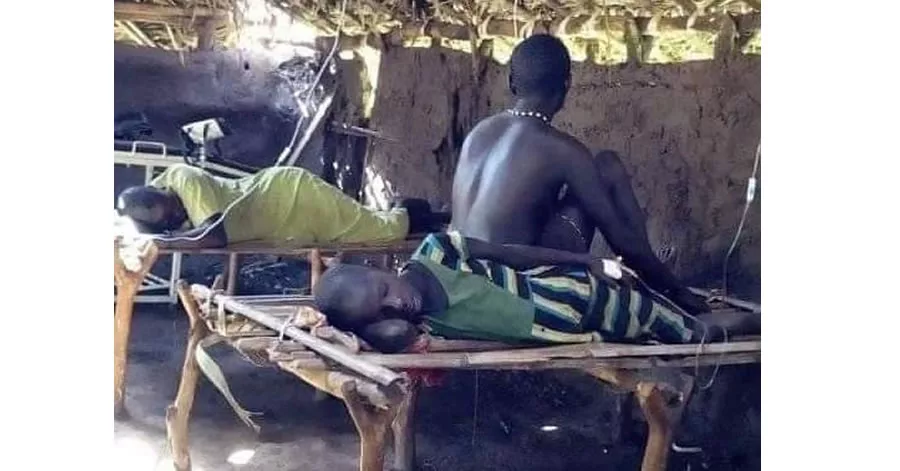
The recent statements made by the Secretary-General of the Sudan People’s Liberation Movement, Dr. Akol Paul Kordit, calling on our citizens to return to traditional medicine, constitute a blatant call to return to the Stone Age, especially after the Secretary-General and his party leadership abandoned the policy of bringing urbanization to the countryside long ago.
This statement embodies the fact that no hope can be expected from a political party whose leaders have betrayed its founding slogans and vision in order to impose tyranny built on tribal and regional discrimination, and which has turned economic and financial enrichment into the ultimate purpose of governing the state. For more than two decades, the Sudan People’s Liberation Movement (SPLM) has waged an open battle against the very people it claims to represent, from the moment it seized power at the dawn of the third millennium.
After more than twenty years of disastrous and destructive rule, this political octopus, the so-called Sudan People’s Liberation Movement, has not allowed the citizens of South Sudan to enjoy freedom, peace, prosperity, or a dignified life. Instead, our people have been subjected to policies that deepen division and hatred among our people, suppress opportunity, and entrench a system designed to preserve tribal dominance and political control.
It is therefore hardly surprising that the Secretary-General of the SPLM, Dr. Akol Paul Kordit, recently made statements suggesting that South Sudan does not need hospitals because during the liberation struggle people survived without them. These remarks were offered in defense of the regime’s failure to provide basic services such as healthcare, education, clean water, and other essential needs in a country whose resources should be more than sufficient to guarantee a decent life for all its citizens.
Such statements reveal the deeper mindset of those who rule our country.
The idea that our people should accept the absence of hospitals in the twenty-first century is not merely irresponsible
It reflects a disturbing acceptance of the collapse of public services and a willingness to drag our society backward instead of building the institutions of a modern state.
The tragedy is even greater when one considers the context. At a time when international donors have begun withdrawing support from parts of the health sector, rural hospitals and medical facilities are facing closure across the country. Instead of addressing this crisis with urgency and responsibility, the leadership of the ruling party appears ready to downplay the consequences, as if the suffering of ordinary citizens is of little importance.
There is no doubt that the effects of this situation will be severe. Everyone understands this reality, including the Secretary-General himself, yet the issue was treated with a level of indifference that reveals how detached the ruling elite has become from the daily struggles of our people.
Few crimes are greater than a government abandoning its responsibility to provide essential services to its citizens.
Education and healthcare are not luxuries; they are the foundation of any functioning society. Yet while ordinary South Sudanese are expected to endure collapsing hospitals and failing schools, many leaders of the ruling party and their allies seek medical treatment abroad in the best hospitals, while their children receive education in prestigious schools and universities outside the country.
This stark contrast represents a betrayal that history will not easily forget.
In light of the Secretary-General’s remarks suggesting reliance on herbal medicine after the withdrawal of donor support, one is forced to ask whether the SPLM, as the ruling party, has any coherent health policy at all. After more than two decades in power, the gap between the leadership and the lived reality of the people has grown so wide that it appears they inhabit two entirely different worlds.
For years our people have endured corruption, repression, and the systematic plundering of national wealth. The suffering that followed the tragic events of 2013 and the years that followed has left deep wounds across the country – wounds that cannot be healed by empty apologies or political statements that lack genuine accountability and justice for the victims.
The difference between apologizing and taking responsibility is vast. True responsibility requires justice, reform, and a commitment to ensure that such tragedies never occur again. Unfortunately, these are burdens that the current leadership has shown little willingness to carry.
It is therefore no surprise that the Secretary-General continues to defend the failures of a regime whose policies have imposed immense suffering on the people of South Sudan. The defense of failure has become routine, while meaningful solutions remain absent.
Yet despite this bleak reality, the future of our country does not belong to tyranny, corruption, or the politics of division. The unity of our people in the face of exploitation, injustice, and failed governance remains the most powerful force capable of transforming our nation.
South Sudanese did not struggle for independence only to be told that hospitals are unnecessary
South Sudanese did not struggle for independence only to be told that hospitals are unnecessary and that the collapse of public services is acceptable. Our people deserve dignity, opportunity, and a government that values the lives of its citizens. The struggle for a just and accountable state therefore continues.
Together for a better tomorrow – for ourselves and for future generations.
About the Author
Sokiri Lo Poni is a South Sudanese political commentator who writes on governance, public accountability, and the future of democracy in South Sudan.
He can be reached at: jojonasoke@gmail.com